Why Roofing Companies That Ignore Code, Documentation, and AI Will Fall Behind
In this episode of the Roofing Success Podcast, Jim Ahlin sits down with Lisa Cimaroli, a longtime industry operator who has successfully built, scaled, and now pivoted her roofing career in a way that reflects where the industry is truly headed.
Lisa’s journey spans door knocking, scaling a multi state roofing company to $30M, expert witness work for law firms across the country, and now helping roofing companies rethink lead generation, documentation, and technology. What makes this conversation powerful is not theory. It is lived experience from someone who has seen roofing from every angle.
For residential roofing contractors, this episode is a wake up call. The way roofing companies used to operate no longer works. Insurance claims are harder. Margins are tighter. Technology is reshaping the field. And the contractors who do not adapt will struggle to survive.
Below is a breakdown of the biggest lessons from this conversation and what they mean for your business.
From Scaling a Roofing Company to Holding the Industry Accountable
Lisa entered roofing in 2014, starting exactly where many contractors did. She knocked doors, ran production, trained sales reps, and eventually became the first woman trainer at a national storm restoration company. After helping grow that company to $64M, she launched her own businesses, Cornerstone Restoration and Guardian Exteriors.
In just three years, those companies grew from zero to $30M across four states.
But instead of continuing to chase growth for growth’s sake, Lisa recognized a bigger opportunity. She began focusing on expert witness and consulting work, helping law firms and homeowners understand what proper roofing construction actually requires.
That pivot revealed something critical. Many roofing companies do not truly understand building code, documentation standards, or how insurance claims are supposed to be supported.
As Lisa put it plainly, many contractors “forget to read their code book,” and that mistake costs them money, credibility, and long term viability.
Why Insurance Claims Feel Harder Than Ever
One of the most valuable parts of this episode is Lisa’s explanation of why insurance claims feel so different today.
The claims are not necessarily harder. The system has changed.
Insurance carriers adopted AI early. Many responses roofers receive are no longer coming from experienced adjusters, but from automated systems and scripted teams who do not have authority to make decisions. If you cannot clearly explain why something is required and necessary under code, your claim stops there.
Lisa explains that roofers are no longer negotiating price. They should be documenting components.
“I don’t want to argue about price. I want to argue about components, and whether they are required.”
When contractors fail to understand where their role ends and when legal or public adjusting support is needed, the homeowner loses and so does the roofer.
This shift has pushed many storm focused companies toward retail work, not because insurance is wrong, but because they lack the systems, documentation, and partnerships needed to fight properly.
The Cost of Ignoring Building Code and Cascading Damage
A recurring theme throughout the conversation is code compliance.
Lisa highlights how often estimates are missing basic requirements like OSHA safety standards, wind upgrades, or cascading damage caused during tear off. Many contractors are already performing this work but never documenting or requesting payment for it.
That leads to shrinking margins and frustrated teams.
“If you had to fix it, why aren’t you asking to get paid for it?”
Understanding code is not about inflating claims. It is about building roofs correctly and explaining why each component matters.
Roofers who take the time to educate their sales teams on code, not just closing techniques, consistently produce larger, more defensible claims and stronger homeowner trust.
Documentation Mistakes That Kill Claims
Lisa now reviews claims from a legal perspective, and she sees the same mistakes repeatedly.
The biggest documentation failures include:
- Not filing a sworn proof of loss
- Poor photo documentation that does not show location or context
- Writing intentionally low estimates with plans to supplement later
That last one is especially damaging.
Starting with an artificially low estimate sets the carrier’s expectations and makes it much harder to justify what is actually required. Proper estimates should reflect the full scope of work from the beginning, even if negotiation happens later.
When documentation is clean, professional, and code based, the entire process becomes easier for everyone involved.
The Shift From Storm to Retail and the Lead Problem
As insurance work becomes more complex, many roofing companies are moving into retail without a clear plan. That creates a new problem. How do you generate quality leads without racing to the bottom on price?
Lisa explains why traditional lead services often fail. They sell the same leads to multiple roofers, reward the lowest bidder, and destroy margins.
This is where technology and AI are creating new opportunities.
Tools that use aerial imagery, storm data, and real time damage detection allow contractors to focus on homes that actually need work. Instead of knocking 45,000 doors to find damage, companies can identify it before ever sending a rep into the field.
The roofers who win in the next few years will be the ones who pair sales skill with data, speed, and smarter targeting.
Building Teams That Scale Beyond the Owner
A major takeaway from this episode is that most roofing companies stall because owners refuse to let go.
Lisa outlines clear growth stages:
- Around $3M, owners must identify and develop leaders
- Between $7M and $10M, systems and training become non negotiable
- At $25M, risk management, culture, and delegation matter more than sales
Throwing new hires into a truck and hoping they figure it out does not scale. Training programs, SOPs, and accountability systems are what separate repeatable businesses from lucky ones.
Lisa also shares a powerful tactic. When team members attend events, they return and teach what they learned. This builds confidence, creates internal leaders, and removes the burden from the owner.
What the Best Roofing Companies Will Do in 2026
Looking ahead, Lisa is clear about what separates winners from everyone else.
The best roofing companies will:
- Lean into AI beyond basic marketing
- Collaborate instead of competing blindly
- Invest in education, not just software
- Build documentation systems that protect both homeowner and contractor
- Track collections, not just sales
Perhaps most importantly, they will be willing to pivot.
“Stop pretending you’re the only one doing well. Raise your hand, ask questions, and collaborate.”
The companies that survive will not be the loudest. They will be the most adaptable.
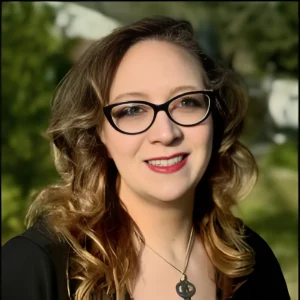
Lisa Cimaroli
Founder, Roof Rider Academy | Expert Witness | B2B Director, PayPixel / StormView AI
Lisa Cimaroli is a nationally recognized insurance-restoration strategist, expert witness, and industry educator with more than a decade of hands-on leadership in roofing and storm restoration, uniquely combining large-scale production experience with litigation-grade technical analysis.
Over the course of her career, Lisa has personally overseen more than $80 million in insurance restoration claims as a contractor, while scaling roofing operations to over $30 million in revenue in under three years and managing branch locations across more than 10 states.
Her career began in large-scale storm restoration as a Project Manager for a nationwide storm restoration company, where she developed deep operational fluency in high-volume claims, carrier processes, and multi-jurisdictional compliance. She later founded Cornerstone Restoration, where she built and led her own teams with a focus on ethical growth, code-compliant execution, and long-term operational sustainability.
Lisa is the Founder of Roof Rider Academy, a consulting and training platform created to elevate contractors, public adjusters, and restoration professionals through defensible systems, compliant documentation, and principled insurance restoration practices.
Roof Rider Academy was built to address the widening gap between sales-driven roofing models and the technical, regulatory, and documentation standards required to properly restore insured properties. Through RRA, Lisa has supported professionals nationwide in building scalable operations that protect both their businesses and the homeowners they serve.
Over the past five years, Lisa has been deeply embedded in expert witness reporting and litigation support for disputed residential and commercial property claims. She prepares Expert Witness Reports used in appraisal, mediation, litigation, and regulatory review, frequently supporting law firms, public adjusters, and policyholders in challenging scope omissions, improper denials, and systemic underpayment. Her expert analysis is grounded in forensic inspections, aerial and on-site measurement data, manufacturer specifications, adopted building codes and local amendments, weather correlation, and policy language alignment. Lisa is widely respected for her ability to translate complex construction, code, and causation issues into clear, defensible narratives that withstand legal and carrier scrutiny.
A central pillar of Lisa’s work is policyholder advocacy. She has actively supported the mission of the American Policyholders Association through education, collaboration, and technical claim support, helping to expose systemic claims-handling failures while equipping industry professionals with documentation that aligns engineering reality with policy obligations.
Her work consistently reinforces the principle that restoration decisions must be driven by what is required to return a property to its pre-loss condition, not by cost-containment shortcuts.
In addition to her expert and advocacy work, Lisa currently serves as Business-to-Business Director for PayPixel / StormView AI, a next-generation property intelligence and damage-detection platform leveraging AI, aerial imagery, and automation. In this role, she works directly with contractors, suppliers, and industry partners to ensure technology is deployed in a way that improves inspection accuracy, documentation integrity, and operational efficiency without compromising ethics or workmanship.
Lisa is a sought-after speaker, panelist, and mentor within the roofing and insurance-restoration industry, frequently addressing ethical insurance restoration, claims documentation and code compliance, carrier-contractor friction, technology adoption with accountability, and women’s leadership in construction.
Her credibility is rooted in real production, real claims, and real consequences, making her a trusted voice across contracting, public adjusting, legal, and technology audiences.
At the core of Lisa’s work is a simple standard: do it right, or don’t do it at all. Whether advocating for policyholders, supporting litigation, building businesses, or educating the next generation of industry leaders, she remains committed to strengthening the restoration ecosystem through competence, transparency, and integrity. Together, we go further.