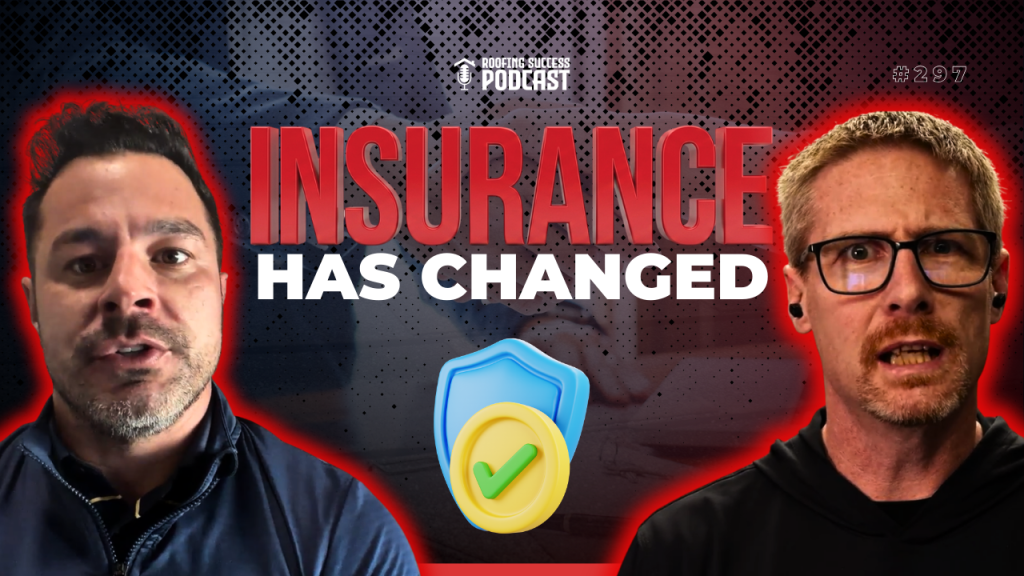
In an industry full of shortcuts, churn-and-burn sales teams, and “spray and pray” recruiting, Nick Royer has built something different.
Thirteen years ago, Nick and his best friend packed up from Cleveland and moved to Dallas to sell roofs. Today, their company averages over 1,700 replacements a year, operates with 26 highly selective project managers, and considers $24 million a “down year.”
Let that sink in.
But this episode is not about hype. It’s about discipline. Systems. Standards. And playing the long game in a market that constantly shifts.
If you’re a residential roofing contractor trying to build something sustainable, here’s what you need to hear.
Purpose: Building a Company That’s Bigger Than a Storm
Nick didn’t start his company to grow as fast as possible. He and his partner made a deliberate decision:
“We didn’t want to grow too big too fast. We don’t require 100 reps. We just want really good guys.”
That purpose shows up everywhere in their model.
Instead of adding 10 reps after every storm, they average roughly two strong additions per year. The result? A tight-knit, disciplined team with long-term buy-in.
Their focus isn’t volume for ego. It’s building something that lasts beyond the next hail event.
Product: Roofing in a New Insurance Reality
If you’ve been in roofing for more than a few years, you’ve felt the shift.
Deductibles are higher. Denials are more common. Appraisals are now part of the game. Policies are more restrictive. Carriers are unpredictable.
Nick put it plainly:
“There’s a very strong chance your roof is going to get denied… but it’s actually going to get approved once we invoke the appraisal process.”
That didn’t exist 10 years ago.
Instead of fighting this new reality, his company adapted. The key shift? Education and expectation-setting.
They now:
- Proactively educate homeowners on their policies
- Prepare clients for possible denials
- Walk them through appraisal as part of the process
- Clarify what insurance will and won’t cover
This reduces emotional blowups and builds trust.
Because today, roofing sales is not just about spotting hail. It’s about navigating insurance complexity with confidence.
Persuasion: Radical Transparency Builds Referrals
One of the most powerful takeaways from this episode is how Nick handles hard conversations.
Instead of avoiding bad news, he leads with it.
If a chimney is rotted from wear and tear and won’t be covered, he tells the homeowner upfront. If deductibles are 3 percent instead of 1 percent, he addresses it early.
“Just because you’re telling someone something they might not want to hear, they need to hear it.”
This mindset protects the relationship long term.
Because in roofing, 95 percent of contractors say referrals are their top source of business. Referrals only happen when expectations are properly set.
People: Why Selectivity Beats Scale
Nick’s hiring process is intense by design.
No quick coffee meeting and polo shirt on Monday.
Instead:
- Multiple meetings
- Long observation periods
- Clear expectations about income delays
- Six months of reserves required before starting
“You’re not going to get a penny for six months.”
That honesty filters out the wrong candidates fast.
He also looks at something most owners ignore: existing relationships.
If a new rep grew up locally and can’t name 20 people to inspect immediately, that’s a red flag.
Roofing is relational. If people know, like, and trust you, your first book of business is already there.
Promotion: The Forgotten Power of Professionalism
Here’s a simple differentiator that too many contractors ignore.
Dress better.
Nick emphasizes professional presentation daily. His team receives constant compliments from homeowners and adjusters about how they show up.
In a market full of basketball shorts and wrinkled tees, professionalism alone separates you.
It’s basic. But it works.
Operations: Cradle-to-Grave Ownership
Every project manager is responsible for their own book of business from sale to completion.
That ownership model creates accountability and pride.
High-volume reps have assistants to manage admin tasks, but they still own the relationship.
That cradle-to-grave system ensures:
- Better communication
- Stronger client relationships
- Fewer internal excuses
And because Nick is still in the field 3 to 4 days per week knocking doors, he stays sharp and connected to reality.
That presence matters.
“I’m in the trenches with the team.”
When owners remove themselves entirely from production, they often lose touch with industry shifts. In today’s environment, that can be dangerous.
Profit: Playing the Long Game
When asked about mindset, Nick pointed to fitness.
There is no finish line.
You don’t run a marathon and then stop moving for the rest of your life. You keep training.
Roofing is the same.
You celebrate once a year at the awards banquet. Then it’s back to work.
“There is no end.”
That mindset is what turns 13 years into a durable eight-figure business.
Growth: What Winning Looks Like in the Next 3–5 Years
Looking ahead, Nick sees opportunity in:
- Strengthening relationships with insurance agents and adjusters
- Building partnerships with realtors
- Mastering denial and appraisal processes
- Continuously improving internal systems
As carriers get tougher, the contractors with the strongest documentation, clearest communication, and most disciplined teams will win.
The barrier to entry may not be licensing. But it’s absolutely systems and stamina.
Prestige: Success Without Ego
One subtle but powerful theme in this episode is humility.
Nick openly admits he’s not the best project manager in his company. He surrounds himself with people who outperform him in certain areas.
That culture of shared contribution creates loyalty and strength.
It also protects against the biggest killer in roofing businesses: owner ego.
Final Reflection: Stop Looking for the Shortcut
If you’re chasing quick growth, viral marketing moments, or overnight success, this episode is your reset.
The formula here is simple:
- Hire slowly
- Train relentlessly
- Tell the truth
- Set expectations
- Stay in the field
- Play the long game
In a volatile insurance landscape, disciplined contractors with strong systems and stronger character will continue to rise.
The storms will come. The policies will change. The carriers will shift.
But companies built on standards and stamina? They last.