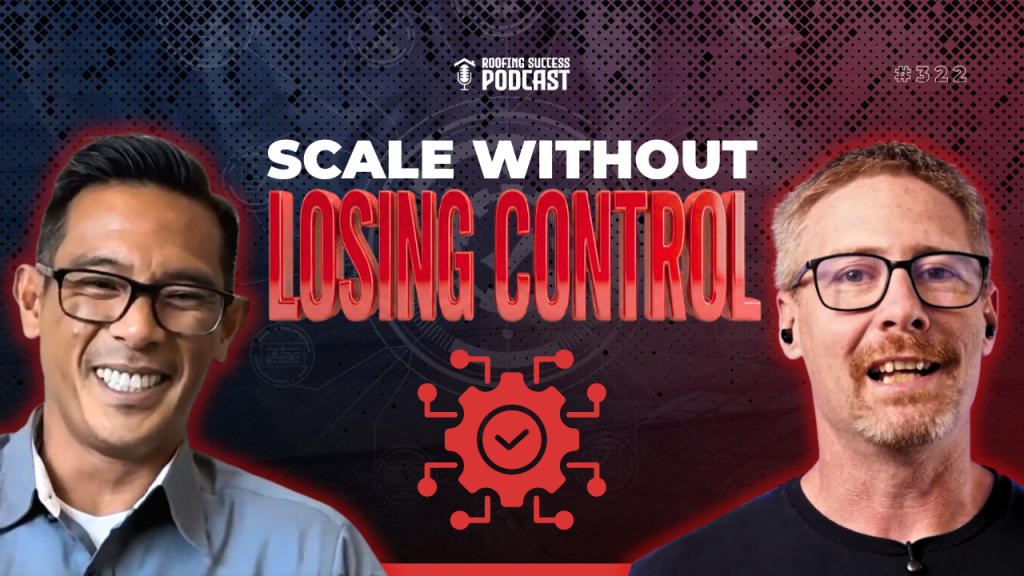
Every roofing company wants to grow. More leads, more salespeople, more crews, and more revenue all sound like signs that the business is moving in the right direction. But growth can expose problems just as quickly as it creates opportunities.
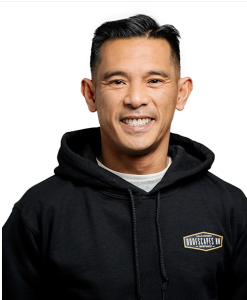
For Jonathan Baldivino, owner of Roofscapes Northwest, building a scalable roofing company has been a long process of figuring out what actually works, documenting it, measuring it, and surrounding himself with people who can execute it.
Jonathan started at the bottom of the roofing industry, literally cleaning up job sites before earning his way onto the roof. Today, his focus has shifted from installing roofs himself to building the standards, systems, data, and team that allow the company to grow without sacrificing quality.
From Jobsite Cleanup to Roofing Business Owner
Jonathan didn’t enter roofing with a detailed business plan. After moving to the United States from the Philippines, he was offered an opportunity to work and accepted before he even knew the job was roofing.
His first responsibility was cleanup. But Jonathan wanted to learn what was happening on the roof, so he worked hard to finish his cleanup responsibilities and earn the opportunity to help the installers. He started with felt installation, continued learning, and eventually became an experienced installer.
A few years into the trade, Jonathan began thinking about roofing as more than a job. He had always pictured himself owning a business, and roofing had become something he understood well.
Eventually, he reached a point where there wasn’t much further to go at the small company where he worked. At the same time, he had young children and was spending long hours working. Starting his own company became a way to potentially earn more while creating more control over his time.
Roofscapes Northwest opened in 2014.
Knowing Roofing Isn’t the Same as Knowing Business
Jonathan’s technical roofing knowledge gave him an important advantage, but it didn’t automatically make running a company easy.
During the early years, he would work long days in the field, take care of his kids, and then open his laptop late at night to write estimates, answer emails, and handle everything else required to keep the business moving.
He also recognized early that he couldn’t stay on the roof all day if he wanted to build a company. Instead of holding tightly to installation because it was what he knew best, he built an in-house team that could perform the work.
His installation experience still gave him the ability to support that team. Even today, team members can FaceTime Jonathan with difficult technical questions and get his input.
That expertise also creates something especially important during the sales process: certainty. When homeowners ask technical questions, they can usually sense when someone isn’t confident in the answer.
For roofing contractors, the lesson isn’t that every owner needs to be the company’s top installer. It’s that the business needs access to technical expertise while allowing the owner to spend time building the company.
Start With Standards
One of Jonathan’s biggest lessons is surprisingly simple: start with standards.
Roofing companies may install many of the same shingles using similar installation methods. The difference can come down to the experience surrounding the installation.
Cleanup is a perfect example.
Jonathan’s standard is straightforward:
“If you can see it from six feet away, pick it up.”
Instead of simply telling employees to “clean up,” Roofscapes Northwest can define what clean actually means. From there, the standard can become more detailed. How many times should the magnet be run? Where should it be run? When should it happen?
This is how a vague expectation becomes repeatable.
It also communicates something bigger to the homeowner. A clean property demonstrates respect. That standard helps identify the type of employees who fit the company’s expectations and, over time, helps shape the company’s culture.
Standards don’t have to begin as giant operations manuals. Start by defining what “good” looks like and continue improving from there.
Growth Exposes Weak Systems
As Roofscapes Northwest grew, Jonathan discovered that many of the processes that worked for a small operation couldn’t handle a larger company.
The company hadn’t necessarily noticed those weaknesses before because it wasn’t large enough to stretch the systems to their limits.
Customer communication was one example. Leads were coming in, but there wasn’t a consistent process for determining which opportunities deserved immediate attention, when follow-up should happen, or how customers at different stages should be handled.
Everything felt urgent.
By creating clearer standards around lead qualification and customer communication, the company could use its time more effectively.
The same thing happened when Jonathan hired salespeople. Initially, it seemed straightforward: there were more leads than Jonathan could handle, so hire another salesperson.
But hiring someone didn’t solve everything. Jonathan still had to learn how to train and manage a salesperson. He said it took three or four attempts before he figured out how to make the role work.
Then another question appeared: if the company has salespeople, how does it consistently generate enough opportunities for them?
That pushed Jonathan deeper into marketing and eventually into the numbers behind the business.
Stop Managing Your Roofing Company by Feel
One of the biggest shifts at Roofscapes Northwest has been learning which numbers actually matter.
Jonathan found that cost per appointment was much more useful than simply looking at cost per lead. A cheap lead doesn’t mean much if that person never becomes a legitimate sales opportunity.
For Roofscapes Northwest, quality means the prospect owns the home, has a need the company can service, and is willing to participate in the company’s inspection process.
But even cost per appointment doesn’t tell the whole story. You also need to know your close rate. Those numbers work together to show whether marketing is producing profitable opportunities and whether salespeople are converting them.
Jonathan’s team also became much more focused on understanding the company’s P&L and historical performance.
That process wasn’t immediate. It took years to collect, organize, and understand enough information to make meaningful comparisons.
Now that historical data provides perspective when business feels slow.
Instead of assuming that a slower month means something is wrong, Jonathan can compare the month against the same period in previous years. That turns anxiety into something measurable.
As Jonathan puts it:
“You cannot think or feel your way to success.”
For roofing business owners, that may be one of the biggest takeaways from the episode. Feelings can tell you where to investigate, but reliable numbers should help determine what you do next.
Build the Business Before You Scale It
Roofscapes Northwest is now entering what Jonathan considers its scaling phase.
His analogy is simple: they have figured out a good recipe, and now they’re trying to make a bigger batch.
That doesn’t mean the systems are finished. Jonathan spent months building department manuals and binders only to realize that by the time he reached the final one, the process would never really be complete. Systems need to keep evolving as the company changes.
More importantly, scaling requires the right people.
Jonathan saw this firsthand when hiring a production manager. It took multiple attempts to find the right person, but he also realized something important: years earlier, even an excellent production manager may not have succeeded inside his company because the systems and expectations weren’t clear enough.
Today, having a production manager who aligns with the company’s values and understands its systems allows Jonathan to turn his attention toward other areas of the business.
That’s a critical distinction. Hiring isn’t simply about finding talented people. You also have to build an environment where talented people can succeed.
The Best Roofing Salespeople Educate
One of Jonathan’s biggest mindset changes was realizing that roofing isn’t only about shingles.
Sales matters, but his definition of good salesmanship isn’t about applying pressure or becoming a hard closer.
It’s about guidance.
Homeowners call roofing professionals because they don’t necessarily understand complete roofing systems, ventilation, design problems, or how different components work together. The salesperson’s job is to inspect the situation, understand what the homeowner needs, and educate them.
Roofscapes Northwest even has requirements around its inspection process because its own data showed that customers who participate in that process have a significantly higher close rate.
Jonathan’s approach is to put on the “teacher hat” and give homeowners the information they need to make a good decision.
That creates trust without relying on pressure.
Scaling Comes After Clarity
Jonathan’s journey shows why growth by itself shouldn’t be the goal.
A roofing company can add leads, employees, crews, and revenue, but if the underlying standards aren’t clear, growth simply puts more pressure on weak areas.
Start by defining what good looks like. Build processes around those standards. Track the numbers that tell you whether those processes are working. Then hire people who align with the way you want the company to operate.
Once you have a recipe that consistently works, scaling becomes less about hoping the business can handle more and more about confidently making a bigger batch.