The roofing industry can make business owners feel unstoppable when demand is high. Phones are ringing, crews are busy, and there is plenty of work to go around. But anyone who stays in the industry long enough eventually learns that those conditions do not last forever.
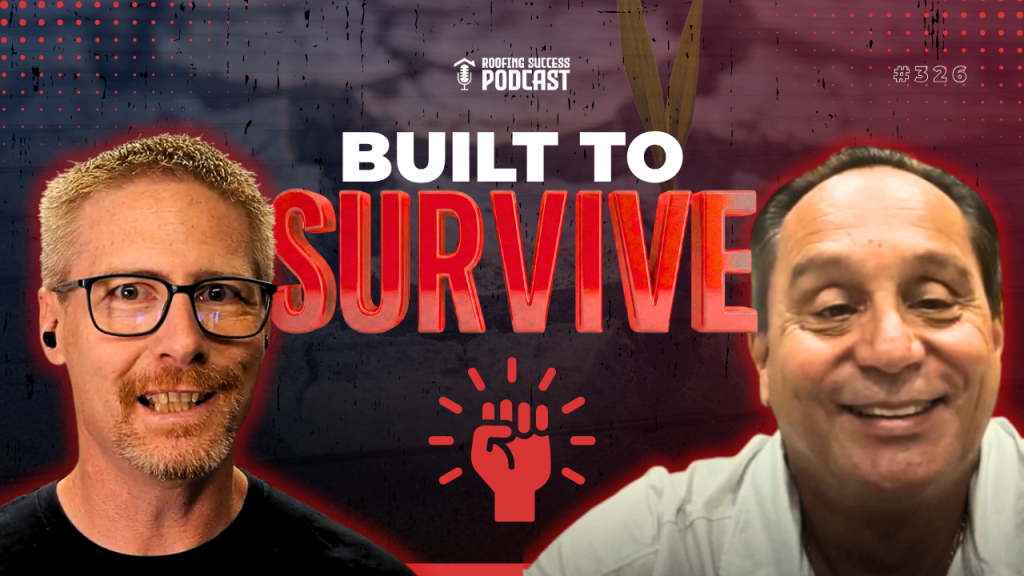
John Famularo has spent 39 years building ABC Roofing in South Florida, which means he has experienced plenty of those cycles firsthand. He has watched material prices climb, construction markets change, technology reshape the industry, and economic slowdowns put pressure on contractors.
His approach to longevity is not complicated: know your numbers, protect the business financially, take care of your employees, serve customers well, and be willing to adjust when the market changes.
Protect Cash When Business Is Good
One of the biggest differences between a company that survives a downturn and one that struggles may come down to what happens during the good years.
John has watched roofing contractors see hundreds of thousands of dollars sitting in their accounts and immediately start spending it. His approach has been different. ABC Roofing keeps cash available, forecasts what is coming, and adjusts expenses when the numbers show the market beginning to slow.
That does not mean eliminating every expense. It means understanding which expenses the company can live without for a while. For example, ABC Roofing traditionally takes the entire office on an annual fishing trip that can cost $30,000 to $40,000. During a slower year, they decided to skip it.
The lesson is simple: enjoy the good years, but don’t operate as though they are guaranteed to continue.
“You always have to have some liquid that, God forbid, things do get slow, you can keep the company alive to get through these bad times.”
Know Your Numbers and Adjust With the Market
John’s team conducts a cost analysis every 30 days. They look at the complete cost of a job, overhead, expected profit, outstanding bills, incoming receivables, supplier balances, and other financial obligations.
That visibility gives them room to adjust.
In stronger markets, ABC Roofing may target higher margins. When demand slows, John is willing to reduce those margins to remain competitive and keep work moving. But that flexibility still has a limit. He does not believe in dropping prices so far that the company is taking on jobs without enough profit to justify the risk and overhead.
That distinction matters. Adjusting to the market is different from panicking because competitors are lowering their prices.
John would rather keep his staff and temporarily accept less profit than chase work that actively loses money. After nearly four decades in business, he knows that roofing markets move in cycles. The objective during a difficult cycle is to remain financially healthy enough to participate when demand returns.
Take Care of the People Who Help You Survive
Many contractors respond to a slowdown by immediately reducing headcount. John takes a different approach.
ABC Roofing has never cut employees simply because business slowed down. Some team members have been with the company for 25 or 30 years, and John considers keeping those people part of his responsibility as an owner.
He has always made sure employees get paid first. The company also uses incentives, bonuses, profit sharing for key employees, and contributions toward health insurance to give people a reason to stay and participate in the company’s success.
That loyalty becomes particularly valuable when conditions improve. Instead of rebuilding a team from scratch, the company already has experienced people who understand its expectations, customers, and systems.
As John puts it, one owner cannot build a successful roofing company alone. You need good estimators, office staff, crews, supervisors, and other people who care about the work.
Let Service Work Carry You Through Slower Markets
When replacement demand slows, smaller jobs can become much more important.
John believes service work can help keep a roofing company alive even when there are fewer full reroofs available. ABC Roofing sends service trucks out consistently and gives repair employees incentives to identify additional legitimate work while they are on site.
For contractors accustomed to chasing only large replacement projects, repairs can seem less attractive. But a profitable service department creates cash flow, keeps employees working, puts your company in front of more homeowners, and can create future replacement and referral opportunities.
ABC Roofing has also expanded beyond roofing. Over the last few years, the company has added gutters, windows and doors, insulation, and a recurring roof treatment service.
John credits that diversification with helping the business through the current slowdown. Instead of depending on one type of project, the company has several ways to generate revenue from the same customer base.
Build a Reputation That Compounds
ABC Roofing spends money on advertising, but a significant portion of its business comes from something that cannot be created overnight.
John says roughly 55% of calls come from previous customers or people who have seen the company’s trucks and signs. After nearly four decades in the same area, the brand has become deeply connected to its local market.
That recognition has been reinforced by community involvement, visible trucks, local events, strong service, and warranties that give homeowners confidence in the company behind the roof.
John also tells his salespeople not to criticize competitors. Instead, they are expected to explain what ABC Roofing can provide, including its service, experience, warranties, and ability to stand behind its work.
A contractor operating from a garage may be an excellent roofer with lower overhead. Trying to tear that competitor down does not make ABC Roofing stronger. The better approach is to clearly communicate why a homeowner should value what your company offers.
Fix Problems Instead of Running From Them
Longevity does not mean avoiding mistakes.
Roofs leak. Employees make mistakes. Problems happen on job sites. Customers sometimes become frustrated. John’s philosophy is to figure out why something happened and then determine what needs to change so it is less likely to happen again.
The same philosophy applies to customer service. ABC Roofing’s goal is not to pretend every project will be perfect. It is to make sure that when something goes wrong, the company responds and leaves the homeowner satisfied with how the problem was handled.
That matters because a problem handled well can still produce a loyal customer, future referrals, and a strong reputation.
Keep Evolving Without Chasing Everything
Thirty-nine years in roofing has also required John to change how the company operates.
ABC Roofing moved from handwritten files and filing cabinets into CRMs, aerial measurements, cloud-based systems, estimating technology, and other digital tools. The company now spends thousands of dollars each month on software, but John believes those tools are worthwhile when they increase efficiency and production.
At the same time, he does not jump at every new platform.
Whether the company is evaluating technology, advertising channels, or equipment, John wants to understand the numbers first. ABC Roofing tests new marketing sources, tracks where calls originate, and moves money away from channels that are not producing results. When considering a major equipment purchase, John calculates how much money the company could save and how long it would take for the investment to pay for itself.
Change is necessary. Blindly chasing every new opportunity is not.
Build for the Good Years and the Bad Ones
There is no single strategy that keeps a roofing company operating for nearly four decades. John’s story is more about a collection of disciplined decisions made repeatedly over time.
Keep cash available. Watch your numbers. Protect your margins without refusing to adapt. Take care of good employees. Build strong supplier relationships. Answer the phone. Follow up with customers. Add services when the numbers justify them. Invest in technology when it solves a real problem. And when something goes wrong, fix it and learn from it.
The roofing companies that last are not necessarily the ones that grow the fastest when the market is booming. They are the ones built to keep moving when conditions change.
The good years will not last forever. Neither will the tough ones. The goal is to build a company capable of surviving both.