What happens when a roofing marketing expert finally launches his own roofing company?
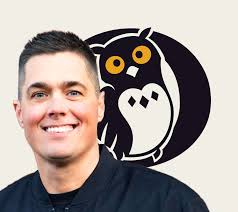
That’s exactly what happened when Tim Brown, longtime roofing marketing strategist and founder of Hook Agency, launched Owl Roofing in the Twin Cities. In this episode of the Roofing Success Podcast, Tim sits down with Jim Ahlin to unpack the thinking, testing, branding, and execution behind building a roofing company from a marketer’s perspective.
What makes this conversation different is that Tim is not approaching roofing from the traditional sales-first model. Instead, he’s building Owl Roofing around branding, SEO, customer psychology, AI search visibility, and long-term market positioning from day one.
The result? Just months after launch, Owl Roofing was already generating 20–30 leads per week, ranking in AI search results, and creating serious buzz in a highly competitive market.
Why Tim Brown Started Owl Roofing
Tim explained that launching Owl Roofing started as more than just a business idea. For years, he had advised roofing companies on marketing strategies but often felt resistance when encouraging contractors to try new approaches.
Eventually, he wanted to prove those ideas in the real world.
What began as a marketing experiment quickly evolved into a full commitment. Tim partnered with roofing professional Noah Berglin and decided to go “all in” rather than treat the company like a side project.
That mindset matters.
Many roofing companies hesitate to fully commit to branding or marketing because they are unsure of the return. Tim’s philosophy is the opposite: if you believe in the outcome, you execute aggressively.
The Importance of Choosing the Right Roofing Brand Name
One of the most fascinating parts of the episode was Tim’s explanation of how Owl Roofing got its name.
Instead of picking a generic roofing company name, Tim intentionally searched for something memorable, ownable, and easy for Google to recognize. He literally browsed emojis while checking domain availability until he found “Owl Roofing.”
That may sound simple, but there was serious strategy behind it.
Tim explained that roofing contractors often choose names that blend into the market:
- Apex Roofing
- Infinity Roofing
- Elite Roofing
- Summit Roofing
The problem is that Google struggles to separate those brands because there are so many similar variations nationwide.
Owl Roofing stood out because it was unique enough for search engines and homeowners to remember.
“If you can make people remember the name, everything gets easier.”
The conversation also highlighted a valuable branding lesson for contractors: your company name impacts SEO, Google Maps visibility, click-through rates, and even AI search recognition.
Why Branding Lowers Your Cost Per Lead
One of the biggest takeaways from the episode was Tim’s belief that branding directly reduces marketing costs over time.
Most roofing companies focus only on direct-response marketing like Google Ads or Facebook lead forms. Tim takes a different approach by splitting his marketing strategy roughly 50/50 between:
- Brand-building
- Direct lead generation
That brand investment includes:
- Yard signs
- Radio ads
- Billboards
- Swag
- Facebook awareness campaigns
- Job site branding
- Community visibility
Why does that matter?
Because when homeowners later search Google for a roofer, they are more likely to click on a name they already recognize.
That improves click-through rates, lowers advertising costs, and increases lead quality.
Tim explained that the strongest branded roofing companies often end up with dramatically cheaper leads because homeowners already trust the brand before ever making contact.
“The longer-term you can think, the cheaper everything gets.”
Testing Yard Signs Like a Marketer
Most roofing companies order one yard sign design and hope it works.
Tim approached yard signs like a marketing experiment.
He created three different sign variations with different messaging:
- “We Give a Hoot”
- “Protect Your Nest”
- “Who Owl Roofing”
Then he placed hundreds of signs throughout targeted neighborhoods to test which message homeowners remembered most.
Surprisingly, the shortest and strangest message won.
People remembered “Who Owl Roofing” simply because it created curiosity.
That insight reinforced an important lesson: homeowners driving by signs are not reading paragraphs. Simplicity and memorability matter more than clever design.
The Retail-First Roofing Strategy
Although the Twin Cities is heavily storm-driven, Tim intentionally built Owl Roofing as a retail-first company.
Instead of waiting for storms, the company focused on building visibility and market trust in a tight geographic area of roughly 100,000 people.
That hyper-local strategy allows Owl Roofing to:
- Build stronger brand awareness
- Increase referral opportunities
- Dominate Google Maps visibility
- Improve local SEO performance
- Create stronger recall during storms
Tim repeatedly emphasized that roofing companies do not need to market to an entire metro area to grow.
In fact, narrowing focus often creates better results.
“There is extreme power in sticking to 100,000 people.”
Customer Avatars and Strategic Positioning
Another standout part of the conversation was Tim’s clarity around his ideal customer.
Owl Roofing specifically targets:
- Higher-income homeowners
- Busy families
- Homeowners who value project management
- Customers looking for a premium experience
That customer avatar influences everything from ad targeting to yard sign placement.
For example, Tim intentionally places signs near Starbucks and Target instead of Walmart because those locations better align with the homeowners he wants to attract.
This level of intentionality is what separates reactive marketing from strategic branding.
How Owl Roofing Is Winning with SEO and AI Search
The episode also explored how roofing contractors can position themselves for ChatGPT, Gemini, and AI-powered search platforms.
Tim made an important point:
AEO (Answer Engine Optimization) is largely built on strong SEO fundamentals.
The strategies helping Owl Roofing show up in AI search include:
- Building “best roofer” list-style content
- Creating highly localized city pages
- Earning backlinks from trusted websites
- Maintaining consistent brand messaging across platforms
- Using differentiating service features repeatedly online
One particularly smart tactic involved writing content like:
- “Best Roofing Companies in Shoreview”
- “Top Roofers in White Bear Lake”
Rather than avoiding competitors, Tim includes them in comparison content because it increases the chances that his pages rank in both traditional and AI-driven search results.
He also emphasized consistency.
When differentiators like “Protect Your Nest System” and “Three-Step Cleanup Process” appear repeatedly across the website, Google Business Profile, social platforms, and directories, AI systems begin associating those features with the brand.
That consistency builds authority.
Building a Roofing Company That Feels Different
One of the most valuable insights from the episode had nothing to do with ads or SEO.
It was about emotion.
Tim explained that Owl Roofing intentionally creates a “cozy” feeling throughout its branding. From website imagery to messaging and customer experience, everything is designed to make homeowners feel comfortable and cared for.
That emotional consistency creates memorability.
“If you can make people feel, you can make people remember.”
For roofing contractors, that may be the biggest lesson of all.
Marketing is not just about generating leads. It is about creating a brand experience homeowners trust before they ever call you.
Final Thoughts
Tim Brown’s launch of Owl Roofing is a masterclass in intentional roofing marketing.
Instead of relying solely on storm chasing or short-term tactics, he is building a company around branding, customer psychology, SEO, AI visibility, and long-term market dominance.
The biggest takeaway from this episode is that branding is no longer optional.
Roofing companies that invest in differentiation, emotional connection, and strategic visibility will continue gaining market share while competitors blend together.
Whether you are launching a new roofing company or trying to improve an existing one, this episode offers a blueprint for building a roofing brand people remember, trust, and search for.