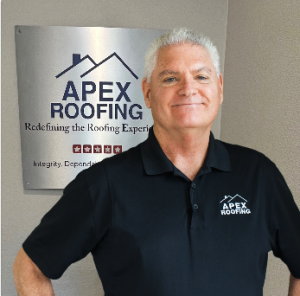
Building a successful roofing company takes more than installing quality roofs. According to Mike Cochran of Apex Roofing, it comes down to creating an experience customers actually remember.
In this episode of the Roofing Success Podcast, Mike shares how Apex Roofing grew from a one-man operation working out of a kitchen table into a respected Texas roofing company with more than 500 Google reviews and a reputation built on customer care, communication, and relationships.
What makes Mike’s approach interesting is that he did not come from construction. He came from the automotive industry, where he learned sales, follow-up, and how to manage customer expectations. Those skills became the foundation for Apex Roofing’s growth strategy.
Starting Without Construction Experience
Mike entered roofing through the storm restoration world, traveling from storm to storm with a roofing company to learn the business. At the time, he admits he knew almost nothing about roofing materials or construction.
What he did understand was marketing and sales.
Instead of focusing on technical roofing knowledge first, Mike focused on relationships, communication, and customer trust. That mindset helped him quickly close deals and eventually launch Apex Roofing in Georgetown, Texas.
“A roof is just a commodity as would be a car. What I did know about was marketing and sales.”
That perspective shaped how Apex would operate from the very beginning.
Why Apex Chose Local Relationships Over Storm Chasing
One of the biggest decisions Mike made early on was avoiding the traditional storm-chasing business model.
Rather than traveling constantly, he wanted to build a company rooted in a local market with long-term customer relationships.
That decision changed everything.
Instead of relying solely on storm volume, Apex focused on becoming known in their communities through relationships with:
- Property managers
- Realtors
- Insurance agents
- Homeowners
- Local businesses
Mike believed that exceptional customer service would eventually create repeat business and referrals that storm chasers could not sustain.
That philosophy also pushed the company toward stronger branding, better communication systems, and a long-term reputation strategy.
Building a Roofing Company Through Relationships
One of the biggest themes throughout the conversation was loyalty.
Mike believes many roofing contractors underestimate the value of long-term relationships with suppliers, manufacturers, referral partners, and customers.
Rather than constantly shopping for the lowest material price, Apex focused on building strong vendor partnerships. That consistency helped them earn better support, faster service, and stronger trust over time.
The same approach applied to referral relationships.
When Apex worked with real estate agents or property managers, the goal was never simply completing one project. The goal was becoming the company those professionals trusted repeatedly.
Mike explained that the key is helping people solve problems quickly and reliably.
For example:
- Helping a realtor close a deal before an option period expires
- Completing multifamily roofing projects on aggressive timelines
- Communicating constantly during large projects
- Minimizing disruption for tenants and residents
One standout example was a 4,000-square roofing project Apex completed in just five days by scaling up labor and coordinating carefully.
That type of execution created stories customers wanted to share.
Customer Experience as the Competitive Advantage
The core of Apex Roofing’s growth strategy is customer experience.
Mike repeatedly emphasized that communication is what separates great roofing companies from average ones.
He believes many bad roofing reviews happen for one simple reason:
“They didn’t communicate properly.”
To prevent that, Apex created systems and accountability around communication.
Their process includes:
- Contacting new leads within minutes
- Daily check-ins from sales reps
- Job site photos sent to managers
- CRM notes documenting communication
- Homeowner walkthroughs after completion
- Continuous updates during projects
Mike also encourages his team to make personal touches part of the process.
Examples include:
- Paying for dog daycare during noisy roof installs
- Bringing treats for homeowners’ pets
- Delivering gifts after project completion
- Cleaning neighboring yards if debris blows over
- Personally checking jobs throughout the day
The goal is simple: make the homeowner feel cared for.
Why 4.9 Stars Is Better Than 5.0
One of the most interesting moments in the episode came when Mike explained why he does not want a perfect five-star rating.
In his opinion, a flawless review profile looks unrealistic.
Construction projects are messy. Problems happen. The real test is how a company responds when something goes wrong.
“I do not believe a perfect five-star company exists.”
Instead of trying to avoid every negative review, Apex focuses on resolving issues quickly and professionally.
Mike believes potential customers actually look for bad reviews to see how the contractor handled the situation.
That mindset shifts reviews from being a vanity metric into a trust-building tool.
The Importance of Managing Expectations
Another major lesson from the episode was the importance of expectation management.
Mike explained that setting expectations is only half the battle. Contractors also need to manage those expectations throughout the project.
That means:
- Explaining timelines clearly
- Communicating delays early
- Showing up consistently
- Following through on promises
- Staying visible during the project
He believes homeowners are far more understanding when contractors communicate proactively rather than disappearing.
This attention to detail becomes especially important during stressful situations or when unexpected issues arise.
Diversifying Beyond Storm Roofing
Mike also shared an important lesson for roofing companies operating in hail markets.
He believes relying entirely on storm volume can make contractors lazy.
Instead, Apex intentionally diversified into:
- Retail roofing
- Repairs
- Multifamily roofing
- Commercial projects
- Metal roofing
- Tile roofing
- Specialty roofing systems
The company even built a dedicated repair division, which became a valuable source of leads and long-term customer trust.
Interestingly, many repair calls eventually turn into full roof replacements later because homeowners remember the honesty and service they received.
Building the Right Team Takes Time
Mike was honest about the challenges of building a strong team.
Like many contractors, he hired people too early, hired the wrong people at times, and learned difficult lessons through growth.
But over time, the culture improved by reinforcing:
- Accountability
- Communication
- Customer care
- Follow-through
- Relationship building
He explained that newer team members eventually see how experienced employees succeed through referrals and relationships, which reinforces the company culture naturally.
That process takes time.
There is no shortcut to building a reputation.
Final Thoughts
Mike Cochran’s story is a reminder that roofing success is not built on flashy marketing alone. It is built through consistent experiences, strong communication, and doing the right thing repeatedly over time.
Apex Roofing did not grow because they chased every storm or focused only on sales volume. They grew because they built trust with homeowners, referral partners, and their community.
And in an industry where communication failures are often the biggest complaint, that commitment to customer experience became their biggest differentiator.
For roofing contractors looking to grow sustainably, Mike’s approach offers a powerful lesson:
Take care of people first, and the reviews, referrals, and reputation will follow.